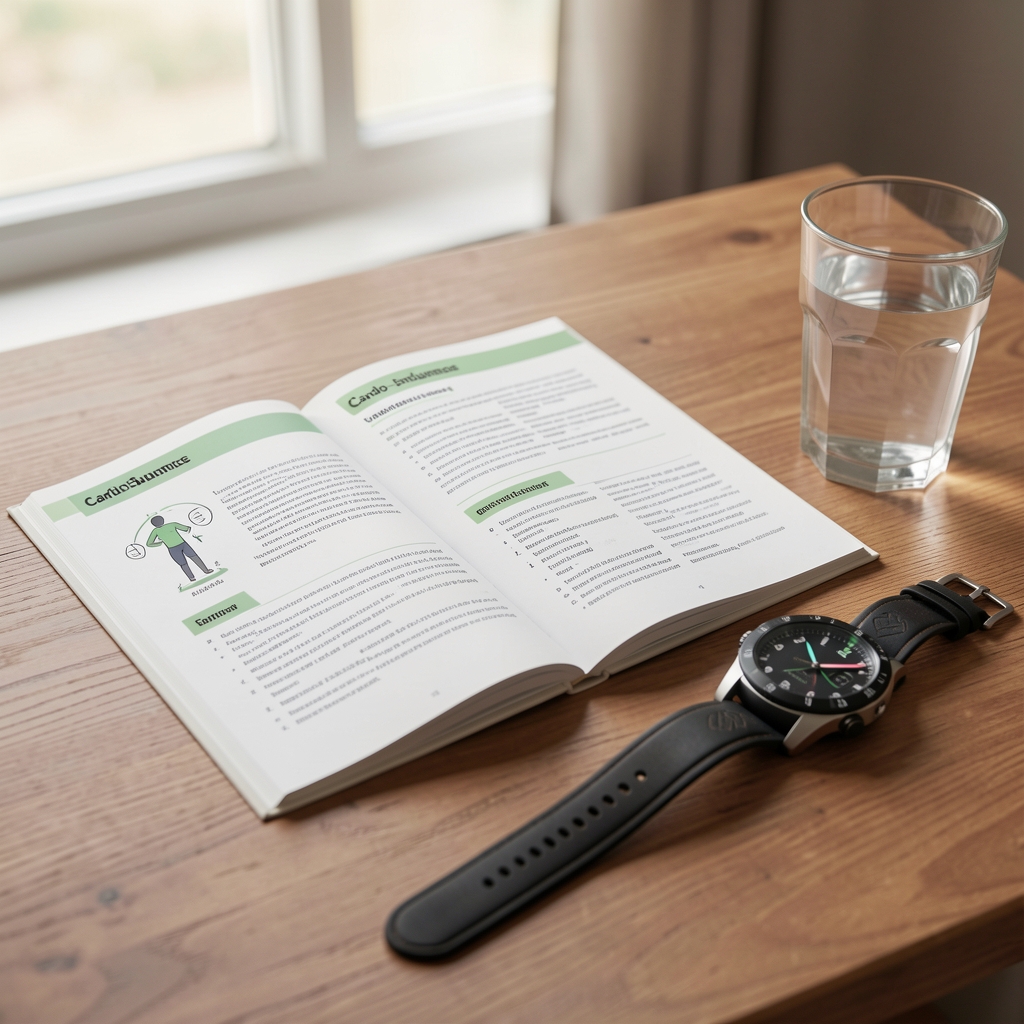
Cardio-endurance primer
An introduction to aerobic base, effort zones and the unglamorous value of easy sessions. Suitable for readers returning after a long break.
Open the primerLibrary · Updated 5 October 2026
Resources
Guides on this site, public-health references and note-keeping tools, arranged so a reader can find a starting point quickly.
On this site
Each guide below opens as a regular page on Nymera. They are written to be read online and can be printed from the browser if a paper copy is easier to annotate.
An introduction to aerobic base, effort zones and the unglamorous value of easy sessions. Suitable for readers returning after a long break.
Open the primer
Movement patterns that relate to everyday lifting, climbing and carrying, with notes on technique and common adjustments.
Open the outline
How to read sleep, workload and appetite as a single record, with a simple weekly review format that needs only a pen.
Open the notesOverview
The table helps readers choose a starting point. It is a navigation aid, and the order does not indicate importance.
| If your question is… | Start with | Reading time | Format |
|---|---|---|---|
| What does a word in an article mean? | Glossary | 2–10 minutes | Reference |
| How do I read a study I came across? | Research digest | 10–15 minutes | Guide |
| How can I describe how a session felt? | Field notes | 5–8 minutes | Worked examples |
| What happens in a heart-rate assessment? | Assessment guide | 10 minutes | Walkthrough |
| How does the site decide what to publish? | Methodology | 8 minutes | Process description |
Beyond Nymera
Some questions are better answered by the organisations that publish guidance directly. The links below lead to external websites that Nymera does not control. They are provided for reference, and their inclusion is not a commercial arrangement.
External publishers may update pages without notice. Where a document is cited in an article, the access date is recorded in the text.

A resource is only as useful as the match between its assumptions and the reader’s situation. The questions below take about two minutes and can prevent a good document from being used in the wrong way.
If you have symptoms, an injury or a diagnosed condition, discuss any change to your activity with a physician or physiotherapist first. See our disclaimer for the full statement.
Note-keeping
A simple template that fits on a single page of any notebook. It is intentionally low-tech so that the habit can survive a busy month.
“A shelf of good references is shorter than most people expect. The habit of rereading them is what matters.”
— Nymera editorial desk, 2026
If a topic is missing from this page, tell us what you were hoping to find. Requests help the desks decide what to write next, and they are answered within seven days.
Send a request Browse every page