Where, when, and how it felt before
Time of day, temperature in plain words, the surface or equipment, and one line on sleep and food from the previous day. No more than two sentences.
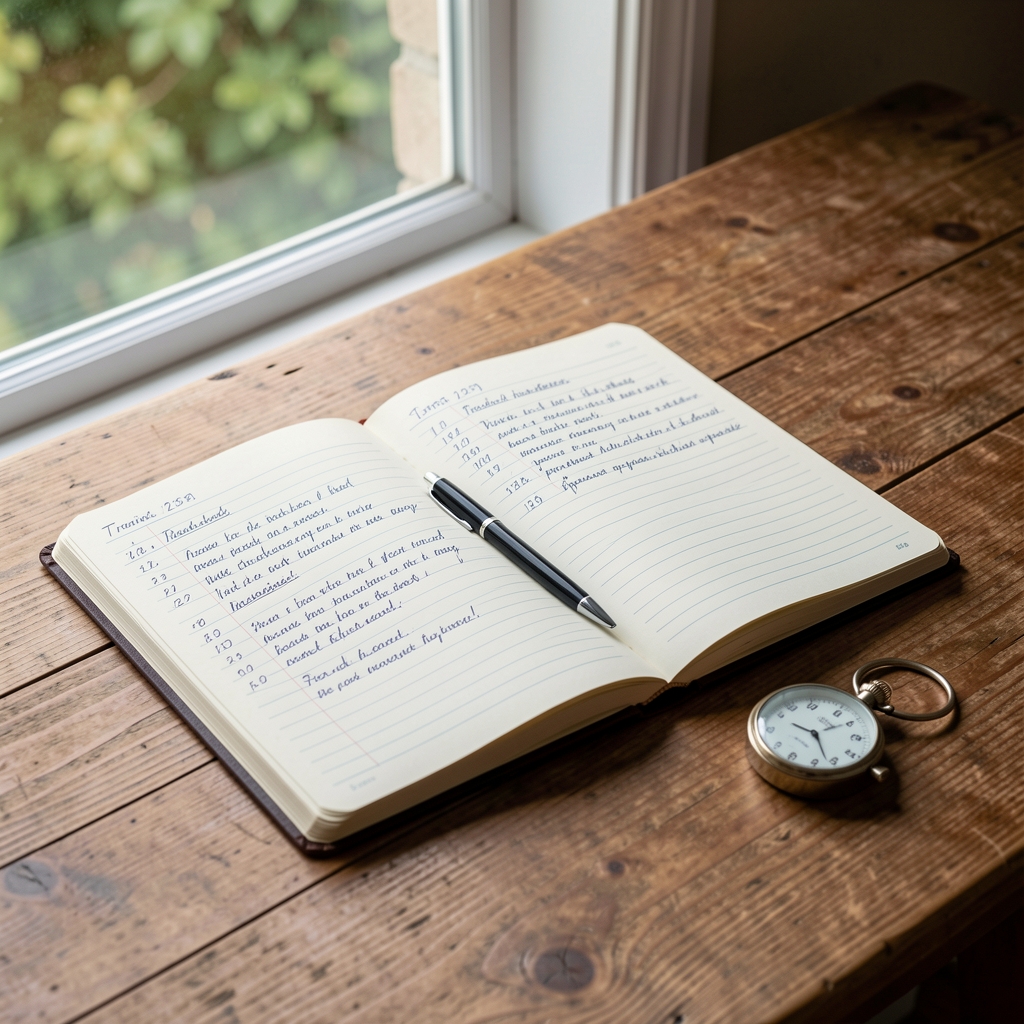
Notebook · Autumn 2026
Field notes
Observations from ordinary training spaces, written without turning them into universal rules.
Scene one
At 6:15 in South Jakarta, the same loop feels different after rain. The surface is slower, the air sits closer, and the first kilometre needs patience. A runner who respects that context may finish with a clearer lesson than a runner who forces yesterday’s pace.
Field notes are valuable because they preserve the conditions around a number. A pace of 6:10 per kilometre on a dry, breezy morning and the same pace after a night of humidity describe two different efforts, even though the watch records them identically. Without a line or two about the weather, the surface and the hour, the later reader of the notebook has only the figure and no way of weighing it.
The Nymera desks collect these small scenes from parks, gym floors, car-park stairwells and apartment corridors. They are not presented as findings. They are presented as the raw material from which better questions are written, and several of the articles in the journal began as a single paragraph in a notebook like this one.
The three scenes on this page come from adult trainees in their late thirties to early fifties who agreed to have their ordinary routines described in general terms, with no names or identifying details recorded.

Method
A useful note is short, dated and specific. The four-part structure below is the one our writers use when they record a session, and it is the one we suggest to readers who want to keep a notebook of their own.
Time of day, temperature in plain words, the surface or equipment, and one line on sleep and food from the previous day. No more than two sentences.
Duration, the main movements or the route, and any change from the usual pattern. The aim is a record another person could reconstruct.
Breathing, technique, grip, balance or concentration. Observations are written as seen, without a verdict attached to them.
A single question, not a plan. Notes that end in a question tend to be reread; notes that end in a rule tend to be forgotten.
Worked examples
The table shows how brief notes can be read for context rather than for scores. The entries are composites written by the editors from several routines, and none of them describes a single identifiable person.
| Setting | What was noted | Possible reading | Question carried forward |
|---|---|---|---|
| Park loop, 6:15, humid after rain | Heart rate sat higher than usual at an easy pace; breathing settled after 20 minutes. | Heat and humidity may raise the cost of an identical pace, so the pace is a weak comparison on its own. | Does effort-based pacing feel more consistent than pace-based pacing in the wet season? |
| Apartment gym, 19:30, after a long workday | Hip hinge felt stiff for the first two sets, then smoother; grip tired early. | Long periods of sitting can change how a movement feels at the start of a session, and a longer warm-up may be worth observing. | Does five extra minutes of preparation change the first set? |
| Stairwell of an office tower, midday | Eight floors at a steady rhythm; thighs warm, breathing audible but controlled. | A short, repeatable bout can be a simple reference for how ordinary effort feels from week to week. | Does the same climb feel different after a poor night of sleep? |
From the desks
“A number without its weather is only half a record.”
Practice desk, Nymera
“We keep returning to the warm-up, because that is where a long day shows itself.”
Physiology desk, Nymera
“Repeating a plain session twice teaches more than inventing a clever one.”
Practice desk, Nymera
“Rest days belong in the notebook too; they are part of the session history.”
Recovery desk, Nymera
Practical
A note on scope. Field notes describe personal observation. They are not assessments, and they do not replace advice from a physician or qualified coach, particularly when symptoms such as chest discomfort or unusual breathlessness appear during effort.
Common questions
No. Perceived effort, the talk test and a plain description of breathing are enough for most entries. A device can add detail, but it is one source among several, and our assessment guide explains how to read it alongside how the session felt.
Most writers on our desks look for patterns after four to six weeks of entries. Shorter periods are easily dominated by a single poor night or a hot afternoon, and the notebook is more useful when it spans several ordinary weeks.
Yes, through the contact page. We remove names and identifying details before any general description is used in an article, and we explain our approach in the editorial policy.