Nymera Mobility
  1. Home
  2. Insights
Research & Field Notes

Biomechanical Insights & Movement Science

Detailed analyses, clinical syntheses, and observational reports exploring how adults preserve structural integrity, walking economy, and neuromuscular balance.

The Biomechanics of 120 SPM Walking Cadence

Why stepping cadence between 115 and 125 steps per minute provides optimal cardiovascular stimulus with minimal joint impact.

Locomotor studies consistently indicate that human walking efficiency follows a bell-shaped energetic curve. At casual walking cadences (under 95 steps per minute), muscle recruitment is largely passive, offering limited stimulus for mitochondrial density or cardiac stroke volume.

Conversely, intentionally elevating cadence to 115–125 steps per minute increases step frequency rather than stride length. This critical distinction significantly reduces vertical oscillation and heel-strike braking forces, preserving patellofemoral and lumbar cartilage while comfortably maintaining heart rate in the active aerobic zone.

Key Finding: Shorter, quicker strides at 120 SPM decrease peak knee joint reaction forces by approximately 18% compared to over-striding at identical speeds.

Implementing this cadence involves tracking tempo via audio metronomes or wearable cadence monitors during 30-minute steady-state walking sessions four mornings each week.

Locomotion cadence study on track

Practical Takeaways

  • Avoid reaching forward with the heel; strike closer to center of mass.
  • Maintain tall spinal carriage with relaxed shoulder girdle.
  • Sustain conversational pace without gasping for breath.

Functional posture and spine alignment exercise

Recommended Workstation Checklist

  • Monitor top edge positioned at or slightly below eye level.
  • Elbows supported at 90–100 degrees with neutral wrists.
  • Feet resting flat on the floor or on an inclined footrest.

Desk Ergonomics & The Thoracic Reset Routine

Micro-movement interventions to counteract sedentary postural adaptation and cervical spine compression.

Prolonged seated computer work fosters an insidious mechanical drift: the pelvis tucks posteriorly, the thoracic spine rounds, and the head drifts forward relative to the shoulder axis. For every inch the head migrates forward, effective cervical spine loading doubles due to gravitational torque.

The Nymera Thoracic Reset routine is designed as a zero-friction micro-break:

  1. Wall Slide with Scapular Retraction: Stand with back and elbows against a flat wall, sliding arms upward while keeping ribs pinned down. (10 repetitions)
  2. Seated Hip Hinge to Standing: Actively engage gluteal muscles to stand up without momentum or lumbar flexion. (8 repetitions)
  3. Doorframe Pectoral Stretch: Place forearms on doorframe and step through to gently lengthen anterior chest fascia. (30 seconds per side)

Performing this 3-minute sequence every 90 minutes prevents muscular tonicity imbalances from setting into connective tissue.

Sleep Hygiene & Musculoskeletal Tissue Adaptation

The neurological dynamics of non-REM sleep and its critical role in collagen remodeling and neuromuscular restoration.

While daytime walking and mobility drills apply beneficial biomechanical stimulus, structural adaptation occurs during restorative sleep. During stages 3 and 4 of slow-wave deep sleep, physiological temperature drops, parasympathetic tone dominates, and growth factor cascades stimulate cellular protein synthesis.

Chronic sleep disruption under 7 hours diminishes tensile ligament resilience and delays tendon hydration. Our editorial desk highlights three core sleep hygiene practices for active adults:

1. Photobiological Rhythm: Expose eyes to natural outdoor morning light within 30 minutes of waking; dim artificial overhead lights 90 minutes before bed.

2. Thermal Environment: Maintain a bedroom temperature between 18–20°C (65–68°F) to support natural core body cooling.

3. Neuro-Parasympathetic Buffer: Dedicate the final 30 minutes before sleep to light diaphragmatic breathing and fiction reading rather than active problem-solving.

Sleep hygiene and physiological recovery research desk
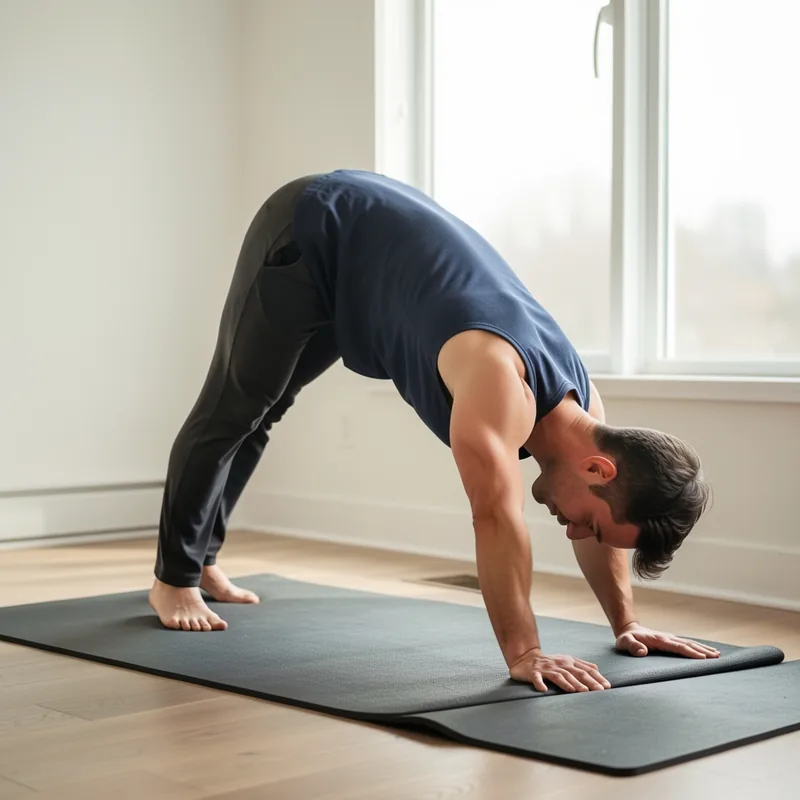
Joint range of motion and hip mobility demonstration

Hip Articulation & Core Alignment

Preserving multi-planar hip mobility to protect lumbar spine integrity during daily locomotion and standing tasks.

The hip joint is a ball-and-socket structure designed for expansive rotational capacity. However, modern lifestyles restrict hip movement predominantly to the sagittal plane (sitting and straight walking). Over time, the joint capsule stiffens, transferring rotational torque directly into the lumbar spine.

Incorporating morning hip 90/90 transitions, quadruped hip circles (CARs), and active pigeon poses ensures that synovial fluid circulates completely throughout the acetabulum, maintaining hip integrity and effortless walking mechanics.